
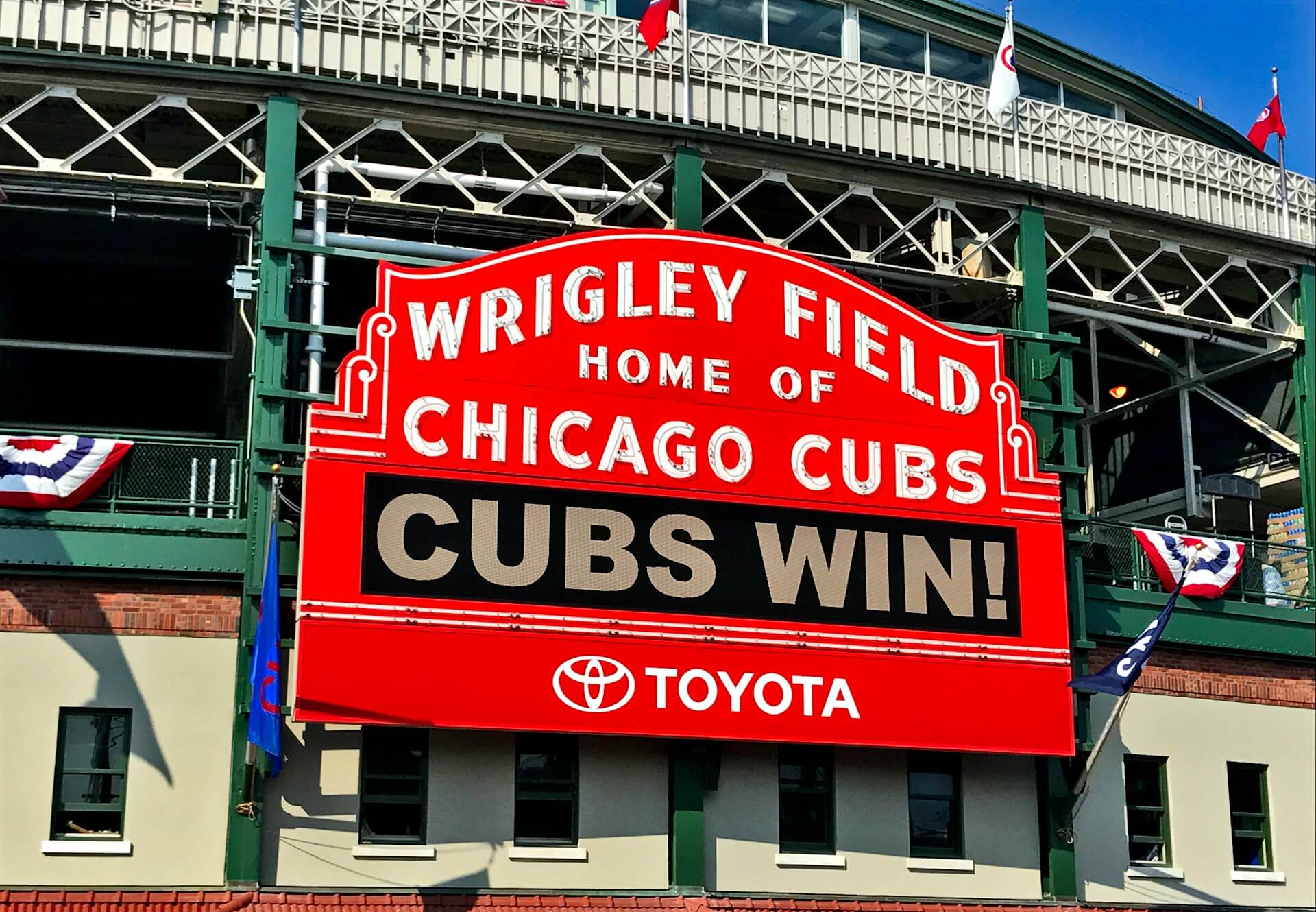
For 108 years, the Chicago Cubs curse haunted one of baseball’s most beloved teams. What began as a furious tavern owner’s outburst at a 1945 World Series game transformed into sports history’s most enduring hex. The Curse of the Billy Goat evolved from a bizarre incident involving a goat at Wrigley Field into a cultural phenomenon that defined how Chicago viewed itself and tested Cubs fans across four generations.
This went far beyond losing games. The curse gave deeper meaning to every crushing defeat, every impossible collapse, every almost-but-not-quite moment. When a black cat crossed Ron Santo’s path in 1969, when Leon Durham let a ground ball slip through his legs in 1984, when Steve Bartman reached for that foul ball in 2003, these weren’t just bad luck. They were fresh chapters in a story that connected families across decades.
The Chicago Cubs curse grew larger than baseball itself. It became woven into the fabric of Wrigleyville, Lincoln Park, and neighborhoods throughout the city, representing hope crushed by heartbreak, faith tested by fate, and ultimately, the power of refusing to surrender.
How the Billy Goat Curse Began in 1945
The curse originated on what appeared to be just another October afternoon. Game 4 of the 1945 World Series brought William “Billy” Sianis to Wrigley Field with two tickets, one for himself and one for his companion Murphy. The catch? Murphy was a goat.
Sianis owned the Billy Goat Tavern and had purchased legitimate tickets for both of them. When they arrived, ushers refused them entry. The official reason was Murphy’s odor and complaints from other fans. The Cubs were ahead in the series 2-1 against the Detroit Tigers at that point.
Instead of walking away quietly, Sianis made his declaration: “Them Cubs, they ain’t gonna win no more.”
The Cubs lost Game 4. They lost the series, 4-3 to the Tigers. What could’ve been dismissed as coincidence became legend when Sianis sent a telegram to Cubs owner Philip K. Wrigley: “You are going to lose this World Series and you are never going to win another World Series again. You are never going to win a World Series again because you insulted my goat.”
William Sianis, Murphy the Goat, and the World Series Incident
William Sianis understood how to capture attention. Murphy wasn’t just any goat. He served as part marketing stunt, part companion, part symbol of how Sianis promoted his tavern in unconventional ways. The goat had made appearances at other events before, always drawing notice.
Getting ejected from the World Series changed everything. Sianis’s anger extended beyond missing a ballgame. It felt like disrespect, an insult to his dignity and his business. When he proclaimed that curse, he tapped into something raw: the idea that actions have consequences.
The curse gained credibility not through magic but through simple mathematics. Every season without a championship made Sianis’s angry words seem more like prophecy than outburst. Murphy became more famous than most Hall of Fame players, and the curse bearing his name outlived everyone who was there that day, influencing how an entire city thought about baseball for over a century.
The 108-Year Championship Drought and Its Most Heartbreaking Moments
From 1908 to 2016, Cubs fans endured a championship drought that tested faith, patience, and sanity. Those 108 years weren’t about constant losing. The Cubs fielded competitive teams, had promising seasons, got real opportunities at glory. What made it brutal was how close they’d come before falling apart in spectacular fashion.
Three moments still make Cubs fans cringe. These weren’t quiet defeats but spectacular meltdowns when victory seemed assured.
The 1969 Collapse
The 1969 Cubs looked unstoppable for most of the season. They held a 1½ game lead over the New York Mets late in the year. Then came September 9 at Shea Stadium, when a black cat appeared from nowhere.
The cat walked toward the on-deck circle where Ron Santo waited. It passed Santo, strolled by the Cubs dugout, and vanished under the stands. The entire scene felt like a bad omen.
It was. The Cubs’ season imploded. They finished eight games out while the Mets surged past them. That black cat became the curse made visible, proof that something beyond normal baseball was working against the Cubs.
The 1984 NLCS Defeat
Hope returned fifteen years later. The Cubs reached the National League Championship Series against San Diego and grabbed a 2-0 series lead. But the Padres won three straight, forcing a decisive Game 5 that would send the winner to the World Series.
Seventh inning. First baseman Leon “Bull” Durham watched a routine ground ball roll toward him. The ball trickled through his legs, tying the game. The Padres won the series.
Durham’s error joined the curse’s greatest hits not because he lacked skill but because the timing was impossibly cruel. Five outs from the World Series, and a simple grounder destroyed everything.
The 2003 Bartman Incident
The 2003 NLCS brought Cubs fans closer to a World Series than they’d been in decades. Game 6 at Wrigley Field, Cubs leading the Florida Marlins 3-0 in the eighth inning, just five outs from advancing. They held a 3-2 series advantage.
Luis Castillo lofted a foul ball toward the left field stands. Moisés Alou moved to make the catch. At the same moment, fan Steve Bartman reached out, deflecting the ball away from Alou’s glove.
What followed was complete chaos. Shortstop Alex Gonzalez committed an error on a ground ball. The Marlins scored eight unearned runs. Cubs lost 8-3, then lost the series. Bartman became the scapegoat, though several fans were reaching for that ball and the real damage came from what followed.
Attempts to Break the Billy Goat Curse
Desperation breeds creativity. Over the decades, Cubs fans and the Sianis family attempted every ritual imaginable to lift the curse. Goats got paraded around Wrigley Field. Holy water was sprayed on the infield. Fans walked goats from Arizona to Chicago, hoping the journey would appease whatever forces kept the curse alive.
In 1973, Sam Sianis brought a goat to Wrigley Field in another attempt to lift the curse. Ushers still said no.
In 1984, the Tribune Company officially invited Sam Sianis and a goat to opening day. The goat was welcomed. The Cubs won their division that year, though they fell in the NLCS.
These attempts revealed the human need to feel some control over uncontrollable outcomes. The rituals brought fans together in shared hope, building community around the dream of ending the drought.
How the Cubs Finally Broke the Curse in 2016
The Cubs clinched the pennant on October 22, 2016, exactly 46 years to the day since William Sianis died, a coincidence that felt too perfect to ignore. The Cubs faced the Cleveland Indians in Game 7 of the World Series with everything on the line.
The game became an instant classic. Neither team could pull away. Extra innings arrived. Cubs fans who’d waited their entire lives held their breath as the 10th inning started.
When the Cubs finally won 8-7, 108 years of waiting ended. The championship drought that had defined generations concluded in the most dramatic way possible. Wrigleyville exploded. Lincoln Park went wild. Across Chicago, the impossible became real.
In perfect symbolism, Sam Sianis rang the original bell from Murphy the goat’s collar. The sound echoed through Wrigley Field, announcing that the curse was finally broken.
The Historic Game 7 Victory Against Cleveland
Game 7 delivered tension from the first pitch. The Cubs built leads, Cleveland fought back. Every pitch carried 108 years of weight.
A rain delay added surreal pause right when drama peaked. During those suspended minutes, players and fans confronted what was at stake.
The 10th inning brought resolution. The Cubs scored the go-ahead run and held on through Cleveland’s final chance. When that last out was recorded, players collapsed in celebration and relief.
The victory validated decades of faith from fans who never stopped believing. It proved that curses, no matter how powerful they seem, can be beaten. The 2016 championship became more than sports success. It represented triumph over impossible odds, persistence finally rewarded, hope justified at last.
The Cultural Legacy of the Cubs Curse
The Cubs curse transcended baseball, becoming part of Chicago’s DNA. The story influenced art, literature, and how residents understood their city. The curse became shorthand for hanging tough against impossible odds, for keeping hope alive when logic said give up.
Local bars and restaurants built their identities around Cubs culture, creating spaces where fans gathered to share agony and ecstasy. The curse shaped Wrigleyville’s character, turning the neighborhood into a pilgrimage site for believers who returned year after year.
Even broken, the curse’s legacy endures. The story of 108 years waiting, of impossible collapses and final vindication, remains compelling. It reminds us that stories have power, that shared experiences bind communities together, and that the longest droughts make success taste sweetest.
Experience Cubs Culture at Pequod’s Pizza
Chicago’s baseball heritage comes alive at Pequod’s Pizza, a historic local institution where Cubs culture thrives year-round. Since 1971, this award-winning restaurant has served deep-dish pizza with its signature caramelized crust to generations of fans celebrating victories and commiserating over defeats. Located in Lincoln Park, Pequod’s offers the perfect atmosphere to relive curse-breaking memories while experiencing authentic Chicago pizza. Visit during game days to share the electric energy that defines Cubs fandom, or stop by anytime to taste why USA TODAY named it Chicago’s best pizza. Make a reservation today.
Photo by Heather Maguire on Unsplash