
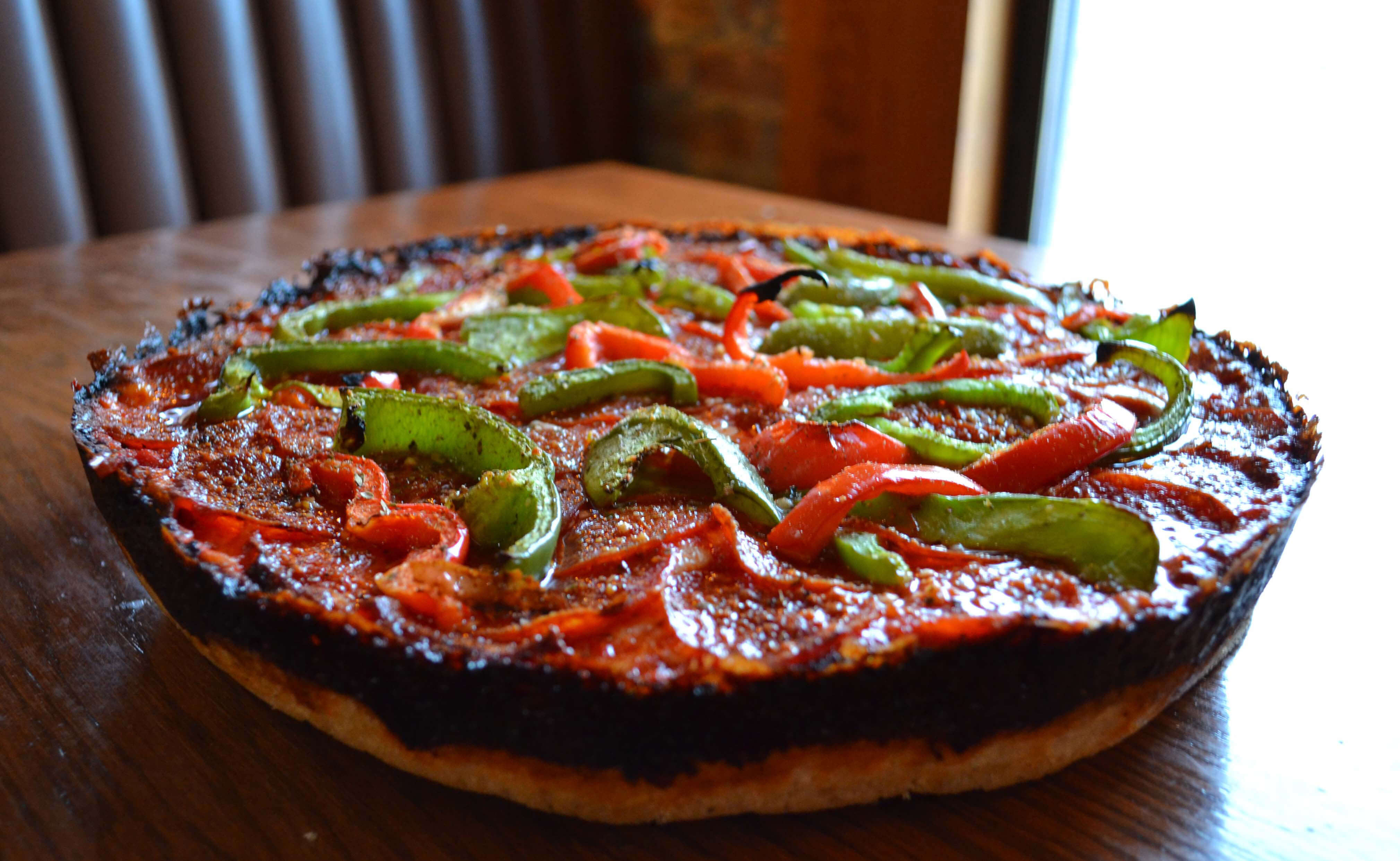
Giardiniera (pronounced jar-din-AIR-ah) is a pickled vegetable condiment with deep Italian roots that grew into a Chicago institution. You’ll find it piled onto Italian beef sandwiches, hot dogs, pizza, and at the center of nearly every debate about what makes Chicago food so uniquely its own.
Packed with crunch, heat, and tangy brine, it’s far more than a simple topping. It’s a culinary tradition that crossed an ocean and never looked back. This article covers where it comes from, what goes into it, how it’s used, and why it belongs on a deep-dish pizza.
The Origins of Giardiniera: From Italy to Chicago
To understand giardiniera, you have to start in Italy, where pickling vegetables was a practical, everyday habit. Before refrigeration existed, Italian households preserved seasonal produce in brine to stretch ingredients through the winter. The word itself comes from “giardino,” the Italian word for garden, which tells you everything about its vegetable-forward character. Traditional Italian-style giardiniera was served as antipasto, with larger vegetable pieces preserved in a vinegar-forward brine alongside mild peppers like bell peppers and pepperoncini.
Italian immigrants brought it to Chicago in the late 19th and early 20th centuries, and that’s when things really started to shift. Adapting recipes to local ingredients and local tastes, they transformed the condiment into something new. Hot peppers entered the picture, an oil-and-vinegar brine replaced the vinegar-forward original, and the vegetables were chopped finer so the mixture could function as a condiment rather than a side dish. What emerged was spicier, richer, and distinctly its own category. Chicago-style giardiniera now stands apart from anything you’d find in Italy, with a flavor identity that’s entirely its own.
| Element | Italian-Style | Chicago-Style |
| Brine base | Vinegar-dominant | Oil-and-vinegar dominant |
| Heat level | Mild | Mild to very hot |
| Chop size | Larger pieces | Finely chopped |
| Typical use | Antipasto, side dish | Condiment, topping |
| Key peppers | Bell peppers, pepperoncini | Sport peppers, serranos, jalapeños |
The contrast is worth appreciating. Italian-style giardiniera delivers sharp acidity and a clean, bright flavor. Chicago-style carries that same tang but wraps it in richness from the oil base, with a building heat from sport peppers and serranos rather than from vinegar alone. Both traditions have real merit, but in Chicago, when someone says giardiniera, they mean the oil-packed, spiced-up version.
What’s Inside: Key Ingredients That Define Giardiniera
The beauty of giardiniera is in how it layers flavors and textures. No two batches are exactly alike, but the foundation stays consistent. Understanding what goes into it helps explain why it works across so many different dishes.
The Vegetables
A classic giardiniera mix typically includes sport peppers, celery, cauliflower, carrots, and green olives, with pickled pepperoncini appearing in many versions as well. Some recipes add green beans, bell peppers, or other seasonal vegetables, depending on who’s making it.
Each component brings something distinct. Cauliflower adds a hearty, mild bite. Celery delivers a satisfying crunch that holds up even after pickling. Carrots contribute a slight earthiness that tempers the acidity. Olives bring a briny, savory depth. The mix is colorful by design, and that variety of textures is a big part of what makes giardiniera so effective as a topping.
The Brine and Heat
The brine is where Chicago-style giardiniera truly distinguishes itself. An oil-and-vinegar dominant base carries garlic, oregano, and red pepper alongside the vegetables, creating something tangy, savory, and aromatic all at once. The heat comes primarily from sport peppers, serranos, jalapeños, and crushed red pepper. Mild versions exist and have their place, but hot giardiniera is what most people associate with the Chicago tradition.
The oil-and-vinegar base does something the vinegar-dominant version can’t quite achieve: it mellows the sharpness slightly and allows flavors to meld together over time. The longer giardiniera sits, the more the vegetables absorb the brine and the more cohesive the whole thing becomes. It also integrates cleanly with other ingredients rather than overwhelming them, which matters quite a bit when it comes to pizza.
What Is Giardiniera Used For?
Its most iconic application is on the Italian beef sandwich, where it cuts through the richness of slow-roasted, juice-soaked meat and ties everything together with acidity and crunch. Chicago-style hot dogs get the same treatment, and Italian subs have long relied on giardiniera as a finishing layer that elevates the whole sandwich.
Beyond those classics, the uses are surprisingly broad. Giardiniera belongs on an antipasto platter alongside cured meats and aged cheeses. It works beautifully on charcuterie boards as an acidic counterpoint to rich, fatty elements.
Stir it into pasta salads for extra depth, spoon it over scrambled or fried eggs for a briny morning punch, or use it as a bruschetta topping where the crunch and heat do something far more interesting than a plain tomato mixture. It fits naturally into grain bowls, adds real character to grilled meats and sausages as a finishing condiment, and the oil straight from the jar makes a flavorful base for sautéing.
That brine carries serious flavor, and home cooks who discover its versatility tend to keep finding new applications for it. Essentially, giardiniera works anywhere that benefits from a hit of acidity, heat, and crunch without the heaviness of a sauce.
Why Giardiniera Works So Well as a Pizza Topping
Pizza might not be the first use that comes to mind, but once you think it through, the pairing makes complete sense. The acidity, heat, and crunch do something genuinely interesting when layered over melted cheese and rich tomato sauce. Chicago food culture embraced giardiniera as a pizza topping organically, extending its role from sandwich condiment to pizza staple in a way that felt entirely natural.
Texture and Acidity
The crunch of pickled vegetables against a soft crust and melted cheese creates a contrast that makes each bite more dynamic. That textural interplay is part of what keeps a slice from feeling monotonous. The brine’s acidity also cuts through the richness of heavy cheese and tomato sauce, resetting the palate between bites.
On a thick, cheesy Chicago-style pie, this matters more than on a thin-crust slice. The deep-dish format amplifies richness, and giardiniera provides the brightness needed to keep things in balance.
Heat That Adds Complexity
The pepper heat in giardiniera layers differently than straight chili flakes or hot sauce. It comes packaged with brine, crunch, and vegetable flavor, so it adds complexity rather than just burn. The heat is present but contextualized, which makes it far more interesting as a pizza element.
Why Deep-Dish Specifically Benefits
The thick, buttery crust, generous layers of cheese, and hearty toppings of a deep-dish pie can feel like a lot without something bright and sharp to counterbalance all that richness. Giardiniera provides exactly that. The oil base integrates cleanly into the pizza without releasing excess liquid or making the crust soggy, which is a practical advantage as much as a flavor one. The pickled vegetables keep each bite feeling fresh rather than heavy. It’s one of those pairings that feels instinctive the moment you’ve tried it, as if it was always supposed to be there.
The Best Topping Combinations for Giardiniera Pizza
Giardiniera plays well with bold, savory toppings that can hold their own against its tangy heat. The best combinations have a clear flavor logic behind them.
Meat Pairings That Amplify the Heat
Italian sausage is the most natural pairing. The fennel and spice notes in a well-seasoned sausage complement the pepper heat and acidity of giardiniera in a way that creates a genuinely classic Chicago flavor profile. Together, they balance each other without either one fading into the background.
Pepperoni works differently but just as well. The greasy, salty spice of pepperoni amplifies giardiniera’s tang and crunch, and the fat content of the meat softens the pickle’s sharpness. It’s a louder combination than sausage, but very satisfying.
Italian beef as a pizza topping echoes the iconic sandwich pairing. Juicy, seasoned beef balances giardiniera’s bite in the same way it does on the sandwich, and the combination reads as distinctly Chicago.
Vegetable Pairings That Balance the Bite
Roasted red peppers bring complementary sweetness that softens giardiniera’s acidity without eliminating it. The two work together rather than competing, making for a slightly more mellow but still flavorful slice.
Mushrooms pair well because of their earthy mildness. They let giardiniera’s brightness lead without competition, and the textural contrast between soft mushrooms and crunchy pickled vegetables adds real dimension to every bite.
How Cheese Choice Shapes the Final Flavor
On cheese-heavy pies, giardiniera’s acidity does its best work, cutting through richness effectively and keeping the overall flavor in balance. Mozzarella’s mild creaminess lets the giardiniera shine, while provolone adds a sharper edge that plays well against the heat.
Try Giardiniera Pizza for Yourself at Pequod’s Pizza
For anyone who wants to experience what giardiniera on deep-dish pizza actually tastes like, Pequod’s Pizza is the place to start. Founded in 1971, Pequod’s has built its reputation over more than five decades on Chicago deep-dish with a signature caramelized cheese crust. The cheese pressed against the edge of the pan caramelizes as it bakes, creating a crispy, golden border that adds a nutty, toasty note to every slice. That crust is the defining detail, and it pairs exceptionally well with giardiniera’s vinegar brightness and crunch.
Visit Our Restaurant
Pequod’s has two locations. The original is in Morton Grove, and the second is in Chicago’s Lincoln Park neighborhood. Both have earned serious recognition, appearing on Yelp’s Top 100 Pizza Spots in America and USA TODAY’s Best Pizza in Chicago list. The restaurant was also featured in season two of FX’s critically acclaimed series “The Bear” in 2023.
Whether you’re a longtime Chicago food lover or visiting the city for the first time, adding giardiniera to a deep-dish pie at Pequod’s is a genuinely worthwhile experience. Make a reservation at the Lincoln Park location or the Morton Grove location and taste for yourself why this combination has earned its place in Chicago’s food culture.